
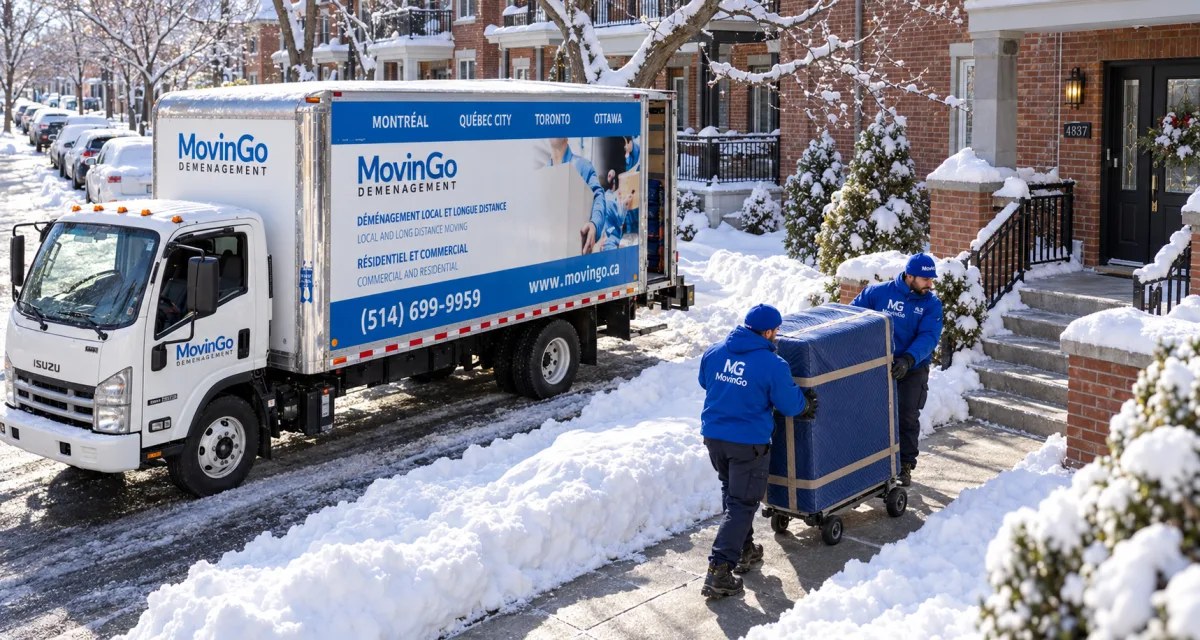
A winter move involves more than adding a coat to your moving-day outfit. Snowbanks can change the carrying route, wet boots can affect floors, and a clear entrance at breakfast may need attention again before delivery. Preparing both properties helps you identify these issues while there is still time to organise a solution.
Written by the MovinGo Team. We prepared this guide to winter moving in Montreal for customers arranging an apartment, condo or house relocation. Use it alongside our Montreal moving services to describe your access and belongings. The recommendations below are practical preparation advice, not a promise that any move can proceed in every weather condition.
Check the Forecast and Confirm Your Moving Arrangements
Check conditions at the departure and destination addresses several days ahead, then again closer to moving morning. Look beyond snowfall: freezing rain, visibility and changing temperatures can affect the plan. Follow Environment and Climate Change Canada’s forecasts and alerts rather than relying only on a neighbourhood social-media report.
Confirm the contact numbers and arrival arrangements with your mover. Ask how weather-related changes are assessed, who will communicate an update and what happens to building reservations if the schedule changes. Do not assume a particular cancellation, refund or rescheduling policy.
For a long-distance move, conditions can differ along the route. Tell the team about fixed access windows and discuss what flexibility is possible before agreeing on the arrangements.
Prepare Entrances, Walkways, and Stairs
Arrange snow removal before the crew arrives at both addresses. Include the path between the loading area and the door, exterior stairs, landings and the space needed to open doors fully. A narrow shovel-width channel may not accommodate a person carrying furniture.
Discuss slippery surfaces with whoever maintains the property. Use treatment appropriate for the surface and conditions; do not assume scattered grit makes every icy stair safe. Check lighting, remove clutter and keep shared entrances usable for other residents.
Confirm who will clear and recheck the route, especially if snow continues falling. Contact the landlord or building manager for shared areas. Falling roof ice, damaged railings or serious ice hazards require qualified help, not an improvised moving-day repair. Tell the movers about unresolved hazards before work begins.
Plan Truck Parking and Building Access
A familiar summer loading spot may be unavailable behind a snowbank. Check the legal parking arrangements for the exact address and ask the borough whether the proposed occupation of the street requires permission or temporary signage. Requirements depend on the location and proposed use; one borough’s procedure is not a city-wide rule.
Review Ville de Montréal’s winter parking guidance and check posted restrictions again on moving day. Temporary snow-removal signs can change where vehicles may stop. A previously agreed loading plan does not override street signs.
Reserve the elevator and confirm the loading entrance, access code and building contact. Describe the carrying distance honestly. Our apartment moving checklist helps organise those building details before the truck arrives.
Protect Floors from Snow, Water, and Grit
Discuss floor protection with the crew and building management before laying anything down. It should suit the floor finish, stay securely in place and allow doors to operate. Curling edges or a bunched covering can create another hazard.
Do not put loose plastic sheets on walking routes. Choose suitable secured protection and agree how moisture will be managed during repeated trips. Keep towels and basic cleaning supplies nearby, outside the carrying path. Check the entrance periodically instead of waiting until unloading is complete.
For example, a condo vestibule may stay dry while meltwater gathers beside the elevator. Include both areas in the preparation plan. Do not expect movers carrying a heavy item to navigate around an unannounced bucket or cleaning station.

Protect Furniture and Boxes from Moisture
Use strong, dry cartons with intact seams. Pack indoors and place completed boxes away from the entrance, where boots or an opening door might bring in snow. Do not leave belongings on wet ground while waiting for loading.
Choose furniture protection that suits the item’s material and finish. Blankets, appropriate covers and other packing materials serve different purposes; wrapping is not a guarantee of waterproof protection. Tell the crew about delicate finishes or manufacturer instructions.
Minimise unnecessary outdoor exposure and organise the next items indoors. If packaging becomes damp, flag it promptly and arrange suitable replacement or drying rather than stacking a weakened carton. Discuss packing assistance in advance, including the materials and work requested.
Prepare Electronics and Temperature-Sensitive Items
Identify electronics, fragile objects, liquids and plants before packing. Ask our team whether each unusual item is accepted and what preparation it requires. A general household moving quote does not answer every item-specific question.
Follow the manufacturer’s packing, storage and operating instructions. Temperature changes can lead to condensation when cold equipment enters a warm room. Keep devices switched off until their own instructions allow use; there is no universal waiting time that suits every device and exposure.
For example, Apple’s Mac laptop guidance specifies operating conditions, including a noncondensing environment. That guidance applies to the devices described, not every appliance. Ask the relevant manufacturer if instructions are unclear. Our guide to questions before hiring movers helps you discuss special-item preparation.
Keep Winter Essentials Accessible
Prepare a bag that stays accessible rather than buried in the shipment. Include warm layers, suitable footwear, keys, documents and your phone charger. Keep medication and any temperature-related handling instructions with the person who needs them.
- Water, snacks and everyday personal items.
- Towels and basic cleaning supplies for arrival.
- Children’s necessities and a change of clothes.
- Pet supplies and a safe plan for keeping animals away from the work.
Make sure someone can reach the building contact and open both properties. Do not pack the only set of keys into a labelled carton and assume it will be unloaded first.
Prepare Your New Home Before Delivery
Confirm key collection and access before departure. Check that essential utilities are available and the receiving area is ready. If the destination is not safely accessible or essential systems are unavailable, tell the team early so the arrangements can be reviewed.
Clear the destination path, check lighting and choose where furniture and boxes should go. A simple room list reduces unnecessary carrying between rooms. Coordinate appropriate floor protection and keep the space near doors free of unpacked contents.
Keep children and pets away from active carrying routes. Have another adult supervise them where needed. Check boxes for damp packaging on arrival and unpack affected contents appropriately. Follow item-specific instructions before reconnecting appliances or electronics.
A Winter Moving Checklist
| When to act | Task | Who to coordinate with |
|---|---|---|
| Several days before | Review access, parking, elevator reservations and unusual items; arrange snow clearance. | Moving team, landlord, building manager and borough where relevant. |
| The day before | Check alerts, confirm contacts and keys, prepare dry boxes and the essentials bag. | Moving team and the person opening each property. |
| Moving morning | Recheck signs, paths, stairs and lighting; report hazards or changed conditions. | Property maintenance contact and moving team. |
| Arrival | Check safe access, floor protection, receiving rooms and damp packaging. | Destination contact and moving team. |
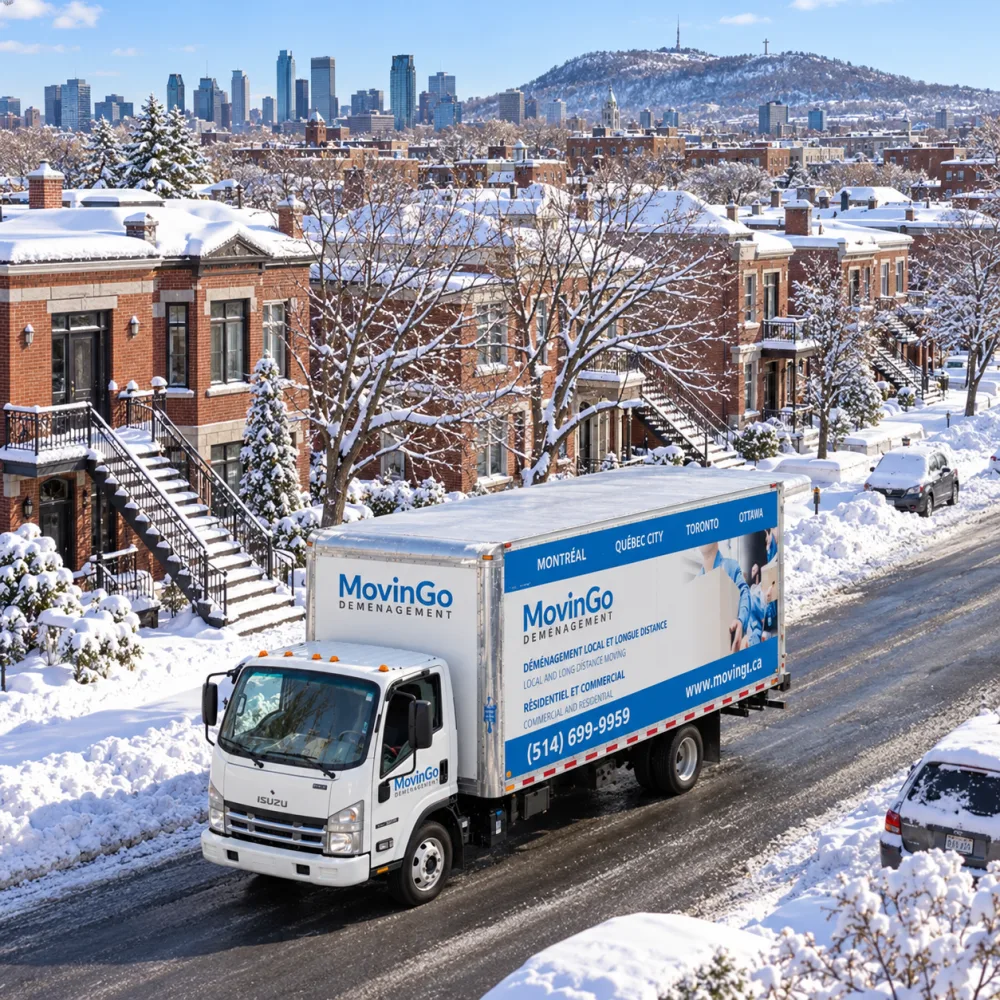
Planning a Winter Move with MovinGo
MovinGo provides residential moving services from Montreal, with surrounding service areas including Laval, West Island, Longueuil, North Shore and South Shore. The practical details still depend on your two addresses.
Our quote form collects the moving date, addresses, residence size, floors and elevator availability, with space for notes and supporting photos or documents. Describe snow clearance, exterior stairs, parking restrictions and special items. Requesting an estimate does not itself confirm a booking.
We use these details to discuss the work and arrangements. Confirm the agreed services and weather-related procedures directly with our team; this guide does not establish insurance coverage, rescheduling charges or an all-weather operating guarantee.
Frequently Asked Questions
Can a move proceed when snow is forecast?
It may be possible, but the forecast alone does not settle the question. Discuss actual access, road conditions and the proposed work with your mover before assuming the plan is unchanged.
Who should arrange snow removal before the movers arrive?
Confirm responsibilities with the owner, landlord or building manager at each property. Do not assume snow removal is included in the moving service; arrange it and communicate unresolved access issues.
How can I protect my furniture from winter moisture?
Use item-appropriate protection, organise loading indoors and keep belongings off wet ground. Report damp materials promptly. Covers help reduce exposure but do not guarantee waterproof protection.
What should I do if severe weather affects my moving date?
Contact the moving team and building contacts promptly. Review the available options and applicable booking terms, then obtain confirmation of any agreed changes. Do not assume an automatic refund or replacement date.
How should I handle electronics after bringing them indoors?
Follow the device manufacturer’s instructions for temperature and condensation. Do not apply a fixed waiting period to every product or power up damp equipment.
Ready to discuss your two addresses? Request a personalised quote from MovinGo and include the winter access details that will help us prepare the plan.